[Week 24] The Choice at the Doorpost (Joshua 24:15)
 Josh Friend on 2026 Scripture Memorization - - Comments
This week, we are memorizing Joshua 24:15.
- Check out my latest Scripture Memorization song here: Joshua 24:15
- If you're new here, see my introduction to this series here.
"But if it doesn't please you to worship the LORD, choose for yourselves today: Which will you worship—the gods your ancestors worshiped beyond the Euphrates River or the gods of the Amorites in whose land you are living? As for me and my family, we will worship the LORD."
— Joshua 24:15 (CSB)
The Crossroads at Shechem
This verse is found at the very end of Joshua's life. He had led Israel through the conquest, settled the tribes in the land, and now he has gathered them all for one last covenant ceremony. And he picked a very specific place to do it. Any time a location is mentioned in Scripture, it isn't there on accident. So, what is this place really about?
The place is Shechem (שְׁכֶם, "shoulder"). It sits in the narrow pass between Mount Gerizim and Mount Ebal, right on the crossroads of the land. And, by this time, it is already thick with memory.
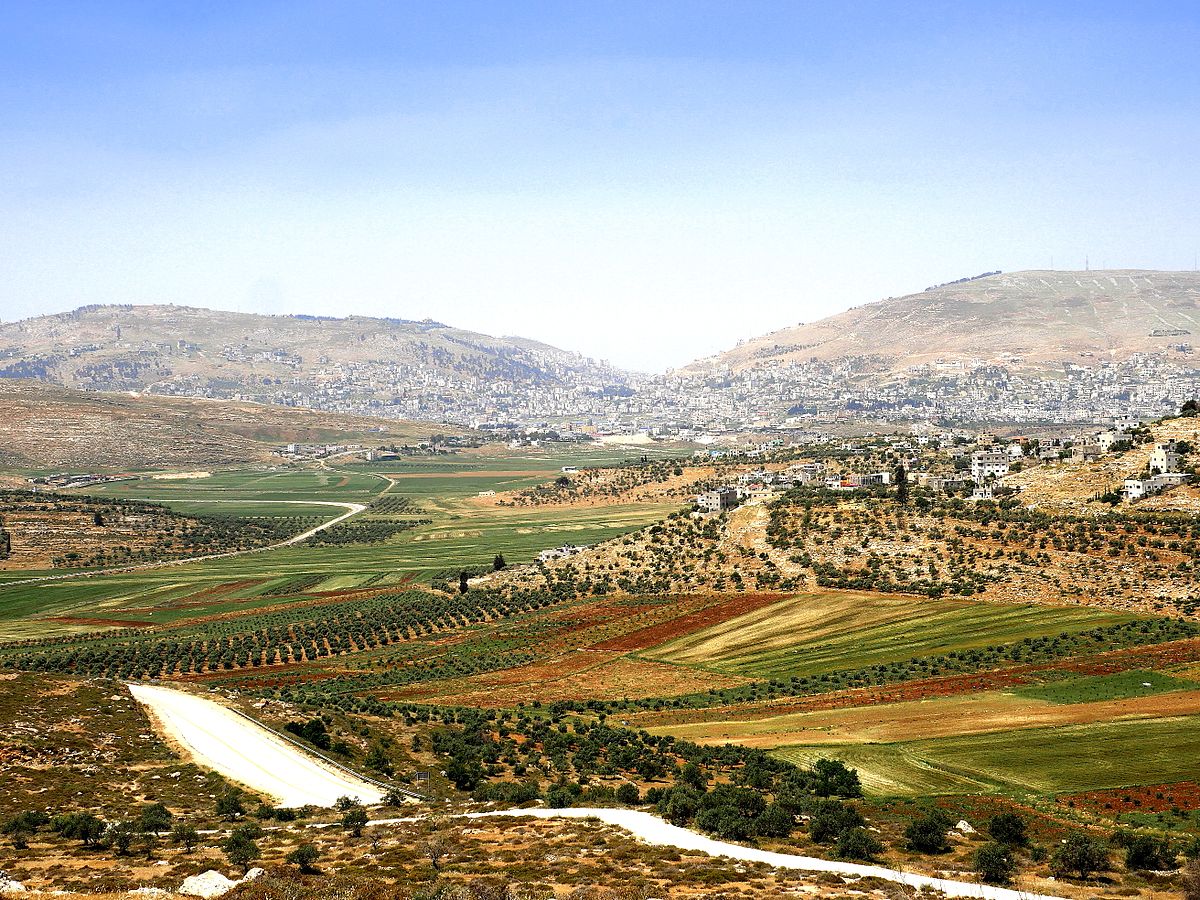 (Mount Gerizim and Mount Ebal, overshadowing Shechem.)
This is where Abraham built his very first altar when he entered the land, the day God promised him everything his descendants would one day inherit (Genesis 12:6-7 (CSB)). Abraham chose to put aside the gods that he had worshiped beyond the Euphrates River. This is also where Jacob, generations later, took the foreign gods his household had been keeping and buried them under the oak at Shechem (Genesis 35:4). Jacob and his family put away the gods of the Amorites that they had begun keeping with them. Both founding families, Abraham and then Jacob, whom Israel is named after, both chose at the crossroads who they will serve: Yahweh God.
And this brings us back to Joshua. This is not his first time here, either. Before Israel even crossed the Jordan, Moses had given specific instructions for this very spot: go to these two mountains, Gerizim and Ebal, set up large stones, plaster them, write the words of the law on them, six tribes on Gerizim for the blessings, six on Ebal for the curses (Deuteronomy 27:1-13). Joshua had faithfully carried that out earlier as they entered the land (Joshua 8:30-35). So when he gathers them here at the end of his life, he is not starting something new. He is returning to a familiar place to reinforce the choice they had made near the two large stones with the words of the law on them.
Now Joshua stands here presenting this choice to them. And he continues, telling the people, "Get rid of the foreign gods that are among you and turn your hearts to the LORD" (Joshua 24:23). He is standing on the ground where Jacob had buried his family's idols in the dirt, swearing a loyalty oath over his entire household.
After the people pledge to serve the LORD, Joshua takes a large stone, sets it up under the oak at the sanctuary, and tells them, "This stone will be a witness against us. It has heard all the words the LORD has spoken to us" (Joshua 24:26-27). The stone was smoothed and plastered so the covenant itself could be written on its face, a physical witness standing in front of the people with the terms of the agreement right there for anyone who wanted to come back and read them.1
Now, here's the sad part about all of this. Many years later, a temple was standing over it called Baal-Berith, "Lord of the Covenant."2 The witness stone had became the centerpiece of worship for a false god. Then Gideon's wicked son Abimelech was crowned king at Shechem (Judges 9), beside this witness stone. The people had chosen who they would serve and it didn't have a good outcome. (Judges 9:56-57).
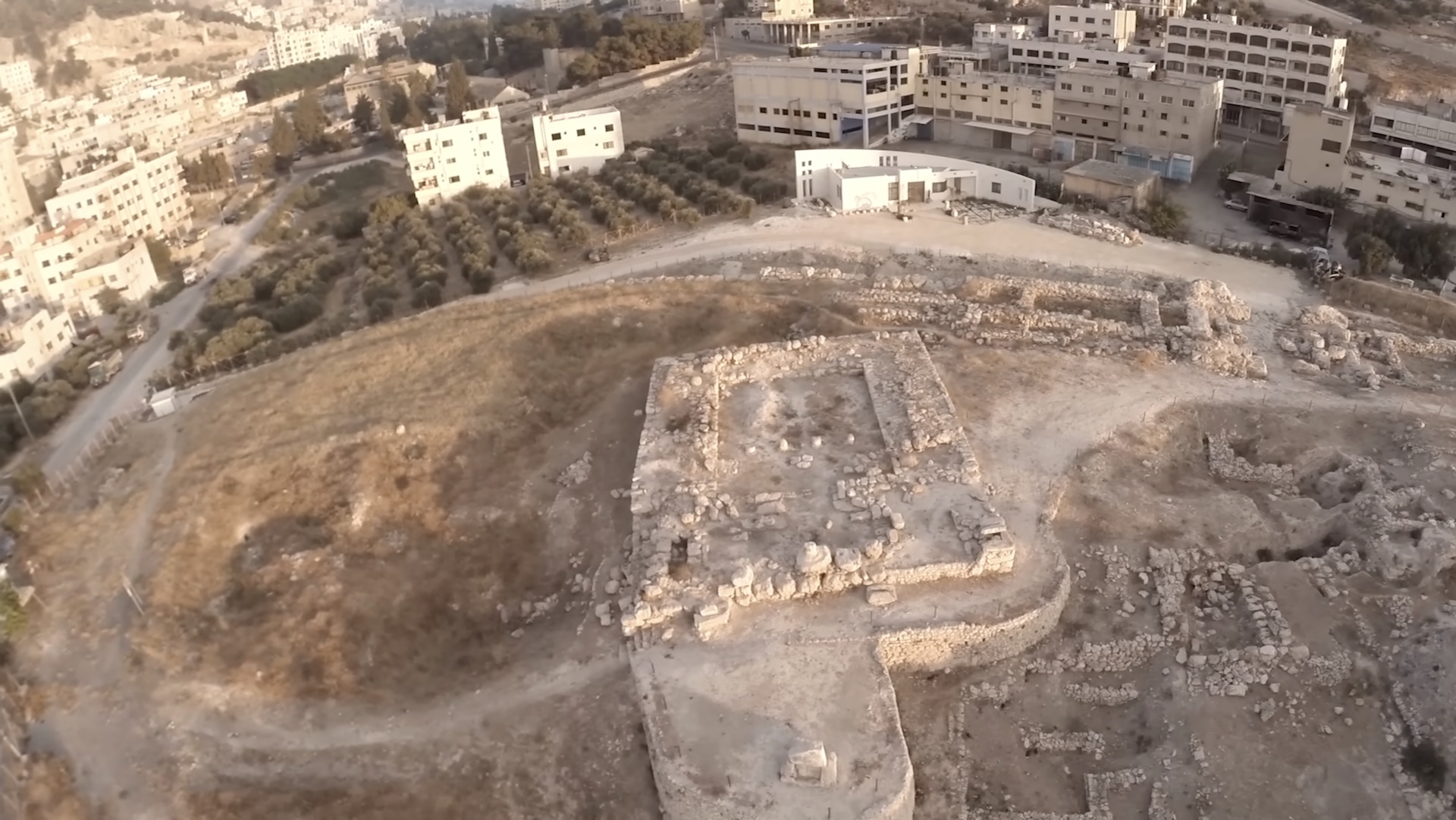 (Archaeological dig at Shechem showing the possible stone that Joshua set up.)
Generations later, after Solomon died, the kingdom of Israel itself split on that very spot. The people of Israel, tried to pick a new path to lighten Solomon's harsh yoke. They brought his son, Rehoboam, there to crown him king. However, Rehoboam was prideful and rejected wise counsel, tearing the kingdom in two on the ground where it had once vowed to stand together (1 Kings 12).
But God didn't leave it at that. Centuries after that, Jesus, the king of the universe, sat down at a well in Shechem, on this same ground, and chose to start his ministry by telling a Samaritan woman that true worshippers wouldn't worship the Father in a place, but would choose to worship Him in spirit and in truth.
One crossroads. One choice. Over and over and over again: who will you serve?
That is the question this place stands for. Now let's look at the word behind it: Serve.
The Word Behind the Choice
If you grew up hearing this verse, you probably know it as "choose this day who you will serve." But if you open the CSB, it says "worship." It's easy to read that and think one of those must be wrong.
Neither one is wrong. They are both translating the same Hebrew word: avad (עָבַד, Strong's H5647). And that word shows up four times in this single verse. It is the heartbeat of the entire passage.
But avad means more than what we usually mean by "serve." In Hebrew, this one root covers work, slavery, service, and worship, all at once, with no line between them. Your labor is your service. Your service is your worship. There is no version of your life where you clock out and stop serving someone.
Before we trace this word through the rest of the Bible, let's look at the word itself. The three ancient Hebrew letters each carry a surprising word picture.3
Ayin (ע) is an eye, meaning to see or to experience.
Bet (ב) is a house.
Dalet (ד) is a door.
Put them together and you get a story: experiencing the house's door. Someone standing at the threshold.
And that picture shows up in one of the most striking passages in the Torah. In Exodus 21, a servant finishes his term of service and has every right to walk away free. And then it says this:
“But if the slave declares, ‘I love my master, my wife, and my children; I do not want to leave as a free man,’ his master is to bring him to the judges and then bring him to the door or doorpost. His master will pierce his ear with an awl, and he will serve his master for life. — Exodus 21:5-6 (CSB)
What a powerful connection! To serve, in Hebrew, is to intentionally decide which house you stand at. Which door you choose. Joshua is not asking Israel to pick a preference or a favorite idea. He is asking them whose doorpost they are willing to be marked at.
Sit with that for a second.
There is no neutral option, you are always serving someone. The only question is who.
From Eden to Paul
Now, this idea of servitude is not a new idea. The story of the servant actually runs from the first page of the Bible to the last. Let's follow its meaning and usage through Scripture.
First, God places Adam in the garden and gives him a job to "work it and watch over it". The Hebrew says it plainly: avad it and shamar (שָׁמַר) it (Genesis 2:15).4 This is the same word: Serve it and keep it. That is the original human vocation. Work, worship, and guardianship, all in one assignment.
The word avad threads through all of Genesis after that, from Abraham's household to Jacob's fourteen years of labor for Laban. But the story takes its sharpest turn with Joseph. His own brothers sold him into servitude, and he ended up serving in Egypt, through Potiphar's house, through prison, all the way to Pharaoh's court. His faithfulness brought his whole family to Egypt to survive the famine, showing God's blessings on those who are actually serving him despite their circumstances. But the very land where Joseph had been sold into slavery became the land where all of Israel was put into forced labor. A new king arose who did not know Joseph, and now the same word, avad, means something very different. Service is corrupted into bondage and forced labor.
And God responds with one of the most important sentences in the Old Testament: "Let my people go, so that they may serve me." Not so they could be free from serving, but so they could serve the right master. The point was never to stop serving, but rather to be freed to serve God.
And when his people are freed and before God at Sinai, He makes it even clearer. Moses asks, "What does the LORD your God ask of you?" And the answer is this: avad Him and shamar His ways (Deuteronomy 10:12-13).5 The same two words from the garden. Serve and keep. The covenant at Sinai is Eden's job description given back to a redeemed, paid-for, people.
Then Joshua 24:15. Choose who you will avad. Four times in a single verse. The decisive moment where Israel is asked to make the call, standing on that same crossroads. And we saw earlier that the people of Israel continued to be servants of other gods as they failed to serve Yahweh God, even into exile and back again.
Then, hundreds of years later, Jesus looks at his followers and says something that would have shocked any young student of the Torah. "I no longer call you servants. I have called you friends" (John 15:15). Jesus was redefining the relationship past obligation and into something deeper: intimacy, trust, and love. What an incredible reframe! God never wanted us to serve him as a job to do, but out of love and friendship.
And then Paul does something stunning. He knows he has been elevated beyond a servant. He knows Jesus called him a friend, a son, an heir (Galatians 4:7). And he opens his letters by calling himself a doulos, a slave, of Christ Jesus (Romans 1:1).
But why would he do that? Because Paul is the servant from Exodus 21. He is the one who could walk away free and instead says, "I love my master. I don't want to go free." Paul stood standing at the doorpost, and chose to stay. Not because he was forced, but because he had been loved.
The arc of the servant through the whole Bible goes like this: created to serve, enslaved, freed, invited to choose, elevated to a son through Jesus, and then choosing to serve anyway out of love because of God's love for us.
Now You Get to Choose
So here you are. Same crossroads. Same question.
The prophet Micah asked it as plainly just as Moses did in Deuteronomy: "What does the LORD require of you?" And the answer God reveals is not complicated: Do justice, love faithfulness, and walk humbly with your God (Micah 6:8). That is what it looks like to serve him on just an ordinary Monday.
And remember what Jesus said at that well, at Shechem, on that very ground in John 4? A Samaritan woman asked him where to worship, this mountain or Jerusalem, and he moved the answer past both. Not here. Not there. In spirit and in truth.6 Worship, our serving of God, is leaving the building. It is no longer about which mountain you climb, or about which ancestor you come from. It's about those who make the choice. Your service, your work, your whole life, that is where the serving happens now.
You are always serving someone. You always have been. The choice Joshua proposed, the only question that really matters is this: Who will you serve?
You get to choose. Will you worship the God who paid the price for you? Who loved you before you even knew you were loved.
Choose today who you will serve. Make the choice at the doorpost. Serve with all you are.
References
Photo by Alaa Kabalan on Unsplash
- The German archaeologist Ernst Sellin unearthed a massive, intentionally smoothed standing stone (matzevah) at Tell Balata (ancient Shechem) in 1926, along with its carved stone base and a sacrificial altar, in front of a monumental fortress temple. G. Ernest Wright and his Drew-McCormick excavation team (1956-1973) identified the stone as "Masseba One" and wrote that "the tradition about Joshua's great stone is probably related to Masseba One." Wright's staff members Edward Campbell and James Ross concurred, calling it "most probably the Matzabah of the late Bronze Temple, and if so identical with Joshua's great stone." The identification is strong but not beyond dispute. The stone was further damaged when excavation co-director Gabriel Welter, who disagreed with the biblical interpretation, toppled it and threw it into a trench. Wright later recovered it and restored it to its original position, where it stands to this day. For a thorough visual walkthrough, see Joel Kramer, "The Discovery of Joshua's Great Witness Stone at Shechem," Expedition Bible.↩
- In Hebrew, berith means "covenant," baal means "lord," and el means "God," so the temple's names (Baal-Berith and El-Berith) literally mean "Lord of the Covenant" and "God of the Covenant." The temple was destroyed by fire when Abimelech turned against the citizens of Shechem (Judges 9:46-49), and archaeologists found a massive burn layer at the corresponding level.↩
- The pictographic reading of eved (עֶבֶד, "servant") as "experience the house door" is drawn from Jeff A. Benner's teaching at the Ancient Hebrew Research Center and his content. I offer the word picture as a devotional and memory tool that reinforces the meaning, not as the scholarly basis for it. The lexical meaning of avad stands on its own.↩
- The Hebrew reads le-avdah u-le-shomrah (לְעָבְדָהּ וּלְשָׁמְרָהּ), "to serve/work it and to keep/guard it." The same verb pair, avad and shamar, reappears in the covenant instructions at Sinai.↩
- "What does the LORD your God ask of you?" The answer includes both la'avod (to serve/worship) and lishmor (to keep/observe), the same two verbs from Genesis 2:15. The covenant at Sinai is Eden's assignment given back to a people God has rescued.↩
- In the Hebrew text of John, the word for "worship" is hishtachavah (הִשְׁתַּחֲוָה), to bow down, to prostrate yourself. It is the other great worship word of the Old Testament, the partner to Joshua's avad. All through the Scriptures the two travel together: "do not bow down to them or serve them" (Exodus 20:5). The Hebrew goes even deeper: the word for "true" worshippers is ne'emanim (נֶאֱמָנִים), the faithful ones, and "truth" is emet (אֱמֶת). Both come from the same root, aman (אמן), the root of faith and the word we say as amen. The faithful worship in faithfulness. The Hebrew reading is drawn from the Hebrew Gospel of John (Dr. Al Garza and James Scott Trimm, Sefer Press, 2022), a translation of eleven Hebrew manuscripts of John housed in research libraries from Paris to the Vatican to Cambridge. I offer these as supporting witnesses to how Hebrew-speaking readers heard the verse, not as a replacement for the Greek text the church has faithfully carried.↩